Translation Tech Is Everywhere. Enterprise-Ready Solutions Are Rare.
The idea of removing language barriers isn’t new—it’s one of humanity’s oldest ambitions. From the Rosetta Stone to the myth of the Tower of Babel, society has long been captivated by the possibility of seamless communication.
That fascination is present in novels, movies and even the current cultural favorite, The Pitt. The Pitt is regarded as the most medically accurate depiction of emergency room care and celebrated for tackling real-world issues, including language-related issues featured in BOTH seasons and highlighting how language barriers can create delays in care.
The consensus is clear: as a human collective, we are compelled by the idea that language should not stand in the way of connection.
That desire is now being met with a new wave of technological ambition. Big tech companies are racing to build products that promise to remove language barriers for consumers with tools designed to translate in real time, across devices, in ways that feel effortless and even magical. The goal? To entice and delight consumers with the idea that you can speak to anyone, anywhere, without friction.
Taken together, these forces point to something bigger:
- Language barriers are still a very real, very persistent challenge
- There is a universal desire to remove them
- Technology is actively trying to close the gap
So the question isn’t whether translation matters—it clearly does.
The question is: how well are today’s solutions actually solving the problem?
As leaders in enterprise translation technology, we’re often asked to weigh in on the latest translation innovations. Here’s our view of the current consumer translation landscape—where it’s advancing, and where it still falls short for enterprise use.
Big Tech Is Betting on Translation
The signal is clear: major players are investing heavily in breaking down language barriers. That alone validates what enterprise leaders have known for years: communication unlocks access, efficiency, and growth.
Here’s a snapshot of what’s emerging and where it falls short for enterprise problem-solving.
Apple AirPods
What was promoted: Translate messages, calls, or in-person conversations, turning everyday earbuds into frictionless, always-on communication tools.
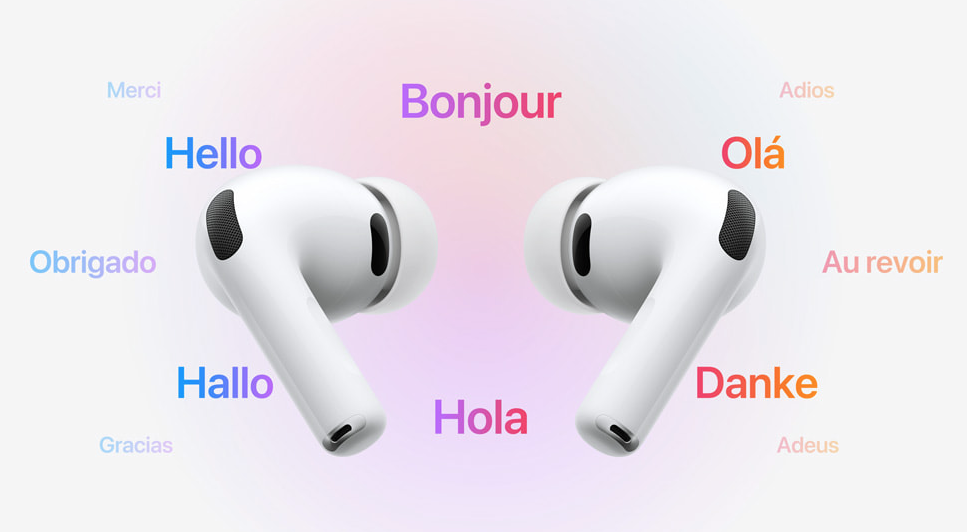
The reality: It’s not quite the sci-fi moment it promises. You’re not effortlessly following fast-paced conversations or suddenly fluent in another language. Early reviews suggest it works—but with noticeable delays and a need for slow, clear speech. In other words, usable in controlled situations, but far from seamless in dynamic, real-world environments.
For enterprise: The challenge isn’t just performance. Earbud-based translation can support one-way listening, but it doesn’t naturally facilitate the kind of fluid, two-way conversations many frontline roles require (unless devices are shared, which raises practical and hygiene concerns).
And for professions like law enforcement, healthcare, or emergency response, wearables can introduce operational tradeoffs. As one officer noted after testing a similar translation earbud in a Police1 field review, reduced situational hearing posed a serious safety concern—an issue that extends to many frontline workers who can’t afford to compromise awareness.
Meta Smart Glasses
What was promoted: Real-time, hands-free translation through smart glasses—subtitles appearing in your field of vision so you can understand conversations instantly, without pulling out a device.
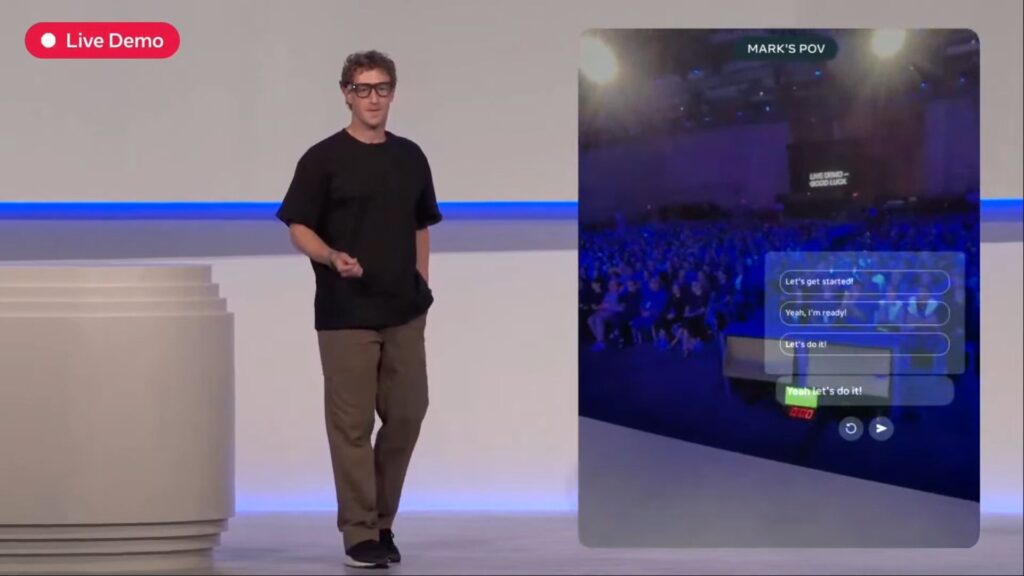
The reality: The demos are compelling, but real-world performance is inconsistent. Reviews point to lag, accuracy issues in fast or noisy environments, and limited language support. It can work in controlled settings, but struggles to keep up with natural, back-and-forth conversation—making it more of a showcase than a reliable, everyday solution.
For enterprise: For enterprise use, the gap is even wider. Smart glasses may be intriguing as a consumer experiment, but they’re not a practical solution for most workplace environments, particularly frontline settings where durability, ease of use and reliability matter. Smart glasses aren’t built to scale and the investment to outfit an enterprise organization does not carry the ROI decision makers would be seeking. And beyond usability, the built-in recording and camera functionality can raise additional privacy, security, and compliance concerns in regulated environments, from healthcare to public safety.
T-Mobile Live Translation
What was promoted: A beta test of real-time translation for T-Mobile users translating live phone calls directly within the network, with no app required and support for 50+ languages.
The reality: The feature is currently in beta, limited to eligible T-Mobile customers (and notably not available for business or government accounts yet). Early feedback and coverage raise open questions around performance, particularly whether translations will feel natural vs. robotic, and whether the system can keep up with fast, nuanced conversation.
For enterprise: As a network-based feature, it’s an interesting step forward—but it doesn’t address the broader needs of enterprise language access. It’s limited to phone calls, tied to one carrier ecosystem, and doesn’t offer the control, deployment flexibility, or centralized management organizations need. And for frontline environments where communication often happens face-to-face—not over a phone call—it doesn’t solve the more complex, real-time communication challenges enterprises are trying to address.
If big tech is investing this heavily in translation, it’s proof the problem is real and valuable to solve. But these early solutions don’t hold up where it matters most: real-time, high-stakes environments like emergency response or complex enterprise settings, where accuracy, speed, security, and control aren’t optional.
Where Consumer Translation Breaks Down in the Enterprise
When you move from a casual conversation to a high-stakes interaction, the requirements change dramatically:
- Accuracy isn’t optional
A mistranslation in a clinical setting or emergency response isn’t inconvenient, it’s dangerous. - Security and compliance are mandatory
Consumer tools aren’t built for HIPAA, FERPA, COPPA, or GDPR environments. Data privacy isn’t a feature, it’s a requirement. - Devices matter
Frontline teams often can’t use personal phones or wearables. They need purpose-built tools. - Scale is non-negotiable
Enterprise translation must work across thousands of users, locations, and interactions simultaneously. - Management and visibility are critical
Organizations need centralized control, usage insights, and the ability to deploy, monitor, and adapt in real time.
Why This Moment Matters
The surge in big tech investment is doing something important: it’s validating the category.
For the first time, translation technology is breaking into mainstream awareness. That creates an opportunity not just to join the conversation, but to shape it.
Because while others are showcasing what’s possible, enterprise leaders are asking a different question: What translation technology actually works in the real world?
The Enterprise Standard: Built for Reality, Not the Stage
Enterprise translation isn’t about features, it’s about infrastructure.
It’s about ensuring that every interaction, whether it’s a patient intake, a 911 call, a classroom instruction, or a large-scale public event, can happen clearly, securely, and instantly.
This is where Pocketalk’s approach and its proprietary language engine, Prism Language System, fundamentally differs.
Instead of retrofitting consumer tools for enterprise use, Pocketalk is purpose-built for environments where:
- Communication impacts outcomes – see this case study from Augusta Health that demonstrates how Pocketalk improved patient outcomes while saving costs
- Security and compliance are non-negotiable – read about our approach to AI, security and data privacy here
- Frontline teams need tools that just work without the wait
With a full ecosystem—including dedicated devices, an enterprise app, one-to-many translation (Sentio), and centralized management through Ventana—Pocketalk is designed for deployment, not demonstration.
 English (US)
  English (Canada)
  English (Europe)
  English (UK)
  Español
  Français
  Deutsch
  Italiano